Finish Guide
Coating Options Explained
Over the years we have gotten a lot of questions on which coating is best for how a customer uses their slide, and what the benefits and drawbacks of each finish are. We put this page together to help you understand what to expect from each option and to head off frustration down the road when a coating does not perform the way someone assumed it would.
Raw Cut / No Finish
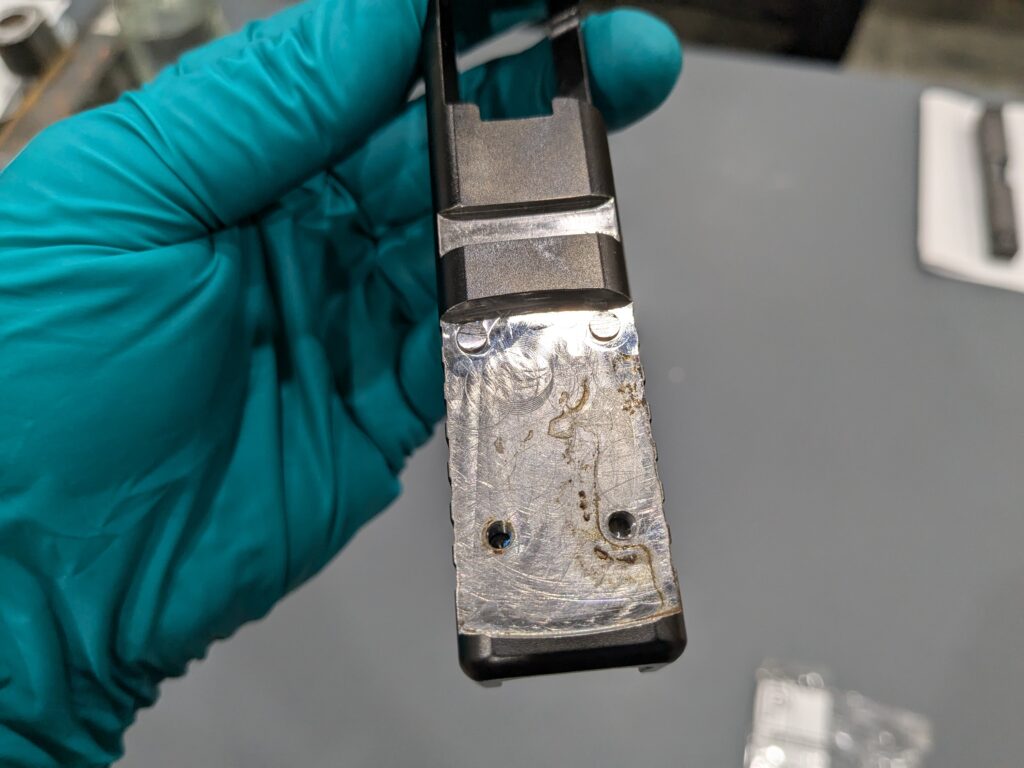
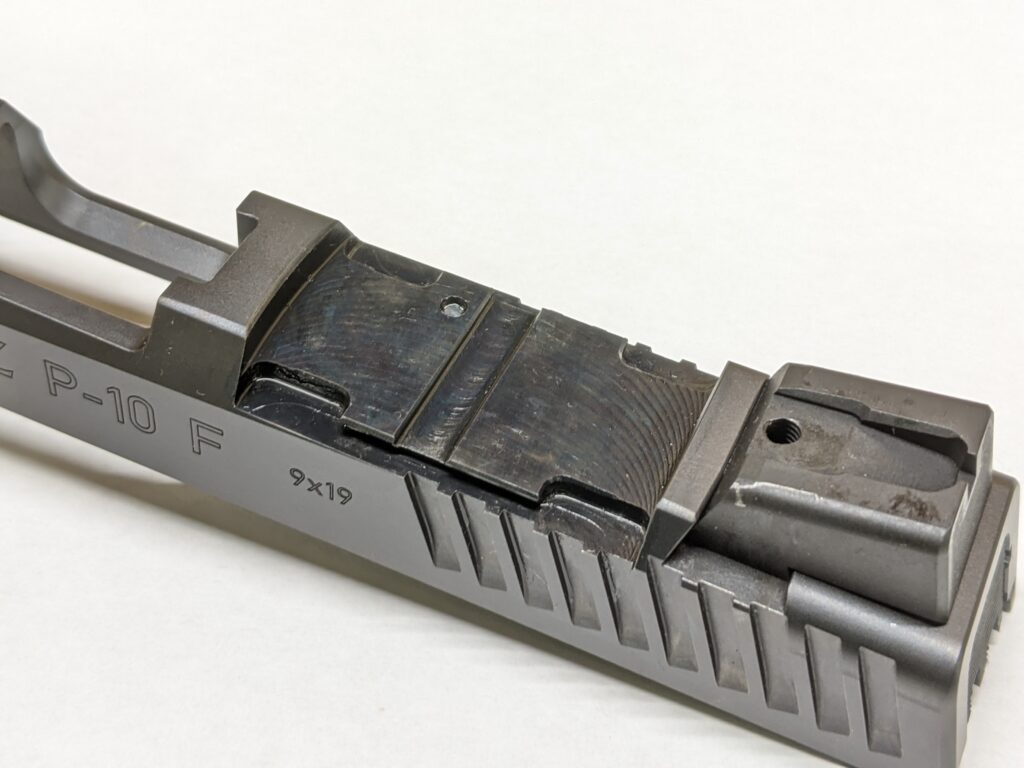
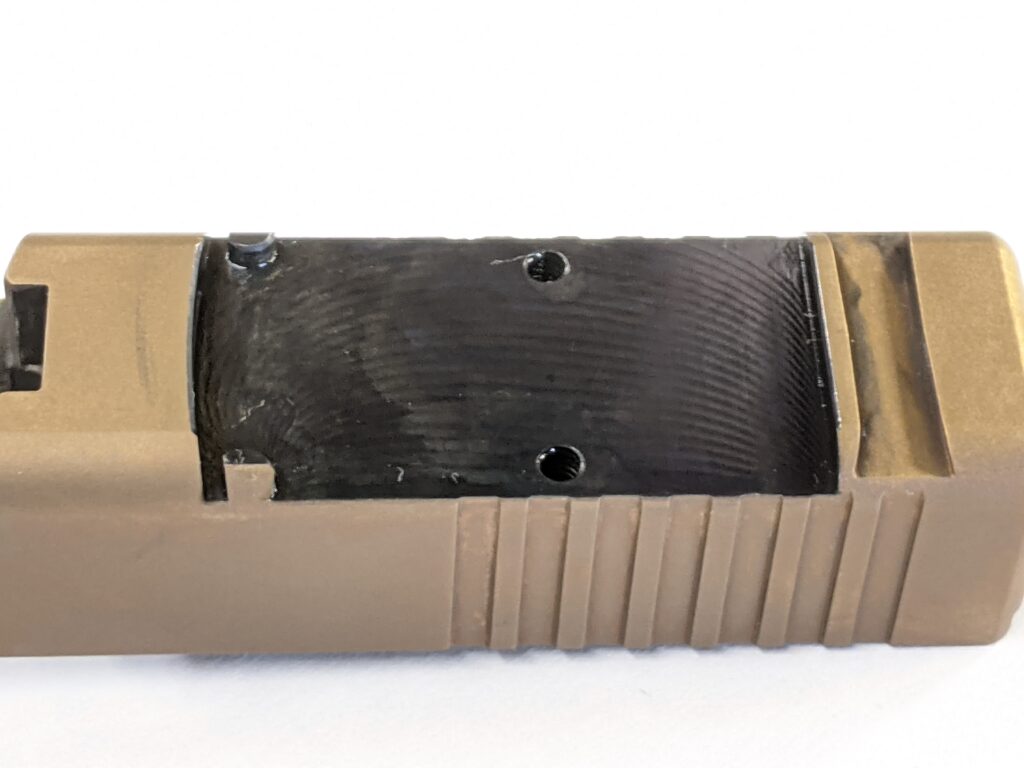
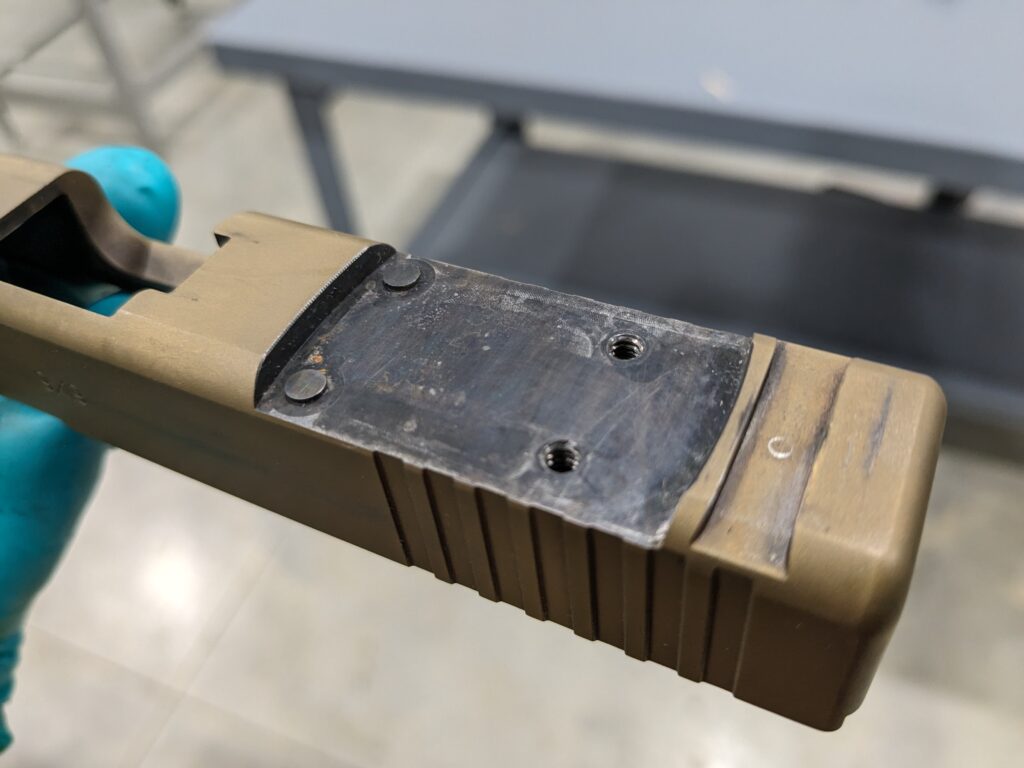
The raw machined finish is just that, uncoated. If you select this option we assume you are coating the slide yourself or having someone else refinish it. We do not recommend running a bare slide, because the exposed metal will corrode over time. Some stainless slides (Sig, Smith & Wesson) hold up better bare, but we still recommend a coating to be safe. With an uncoated slide you will see the machine marks from the milling process. Because we are not refinishing the whole slide, there is also a chance of new cosmetic marks from the machining process. We do our best to control it, but it is a CNC machine, so be aware of that when choosing this option. The far-right example below is a slide that came back to us to be coated after some time in service, and you can see it had started to rust.
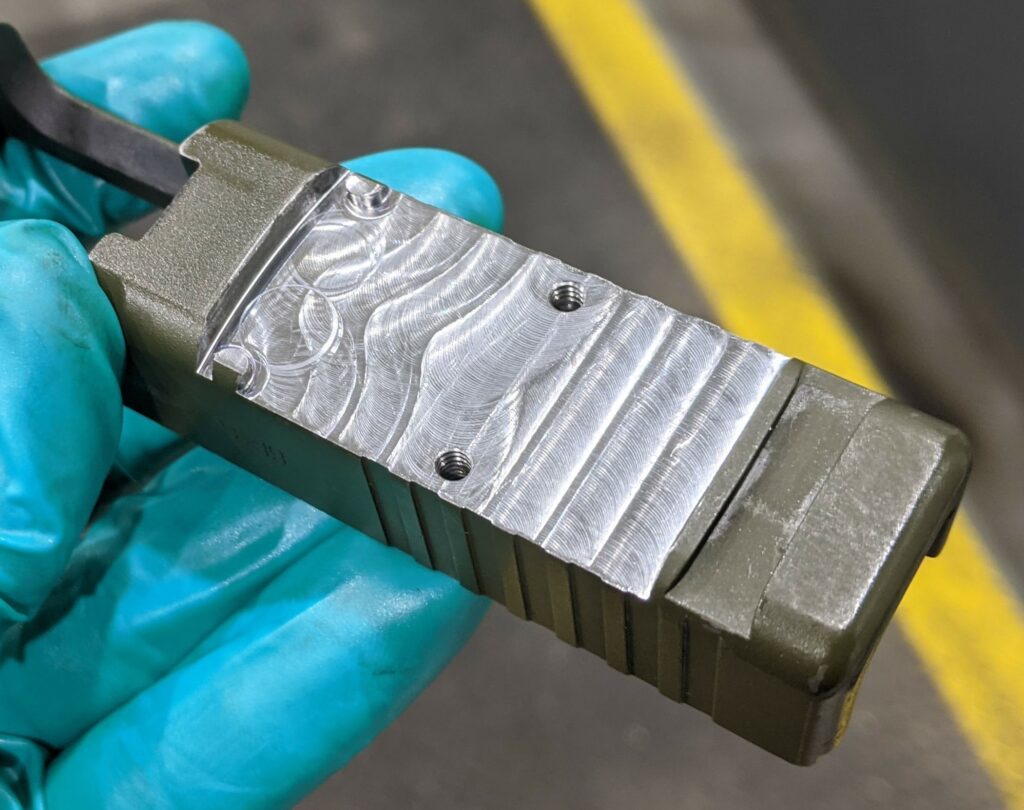
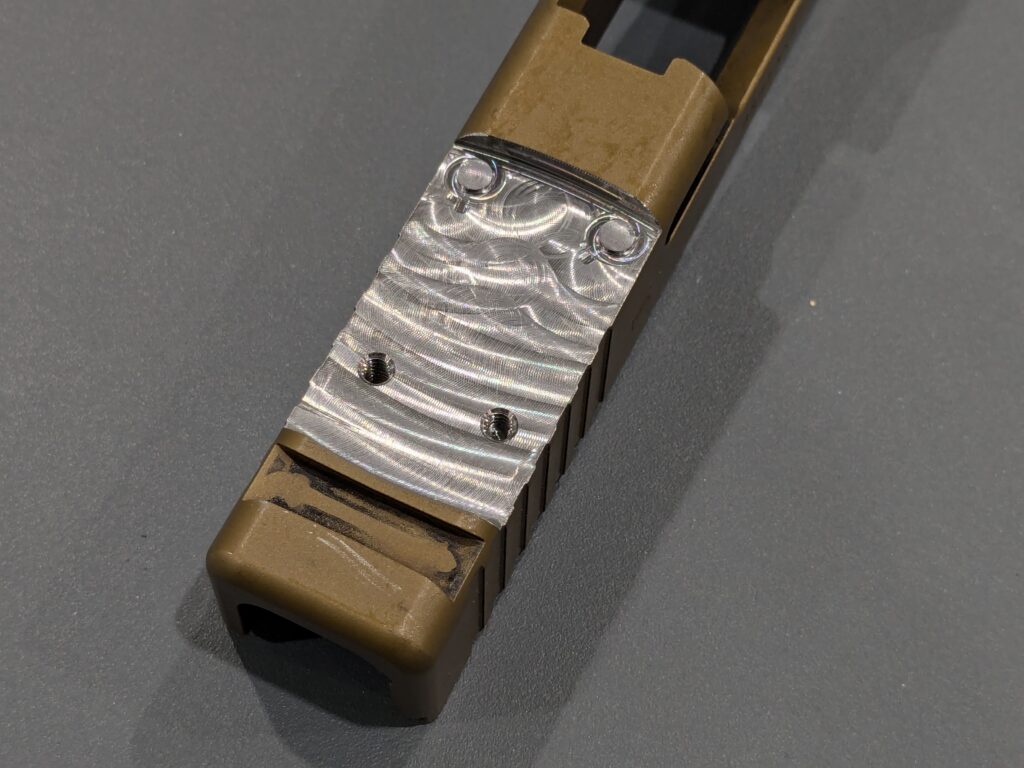
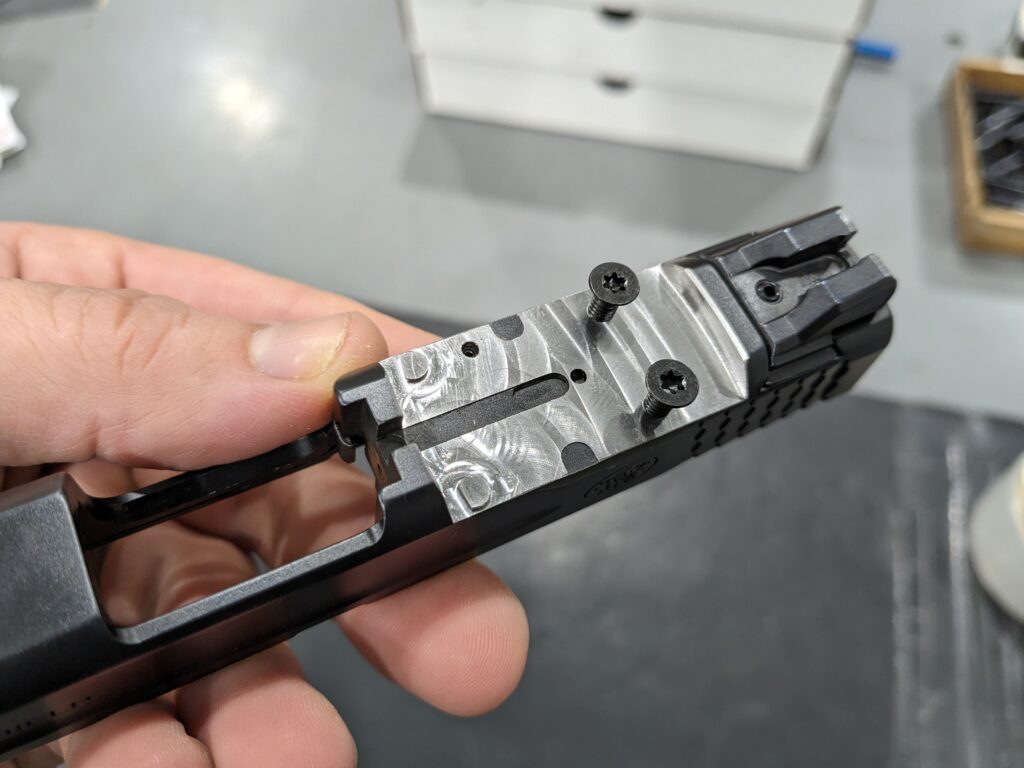
Cold Blue on the Cut Area
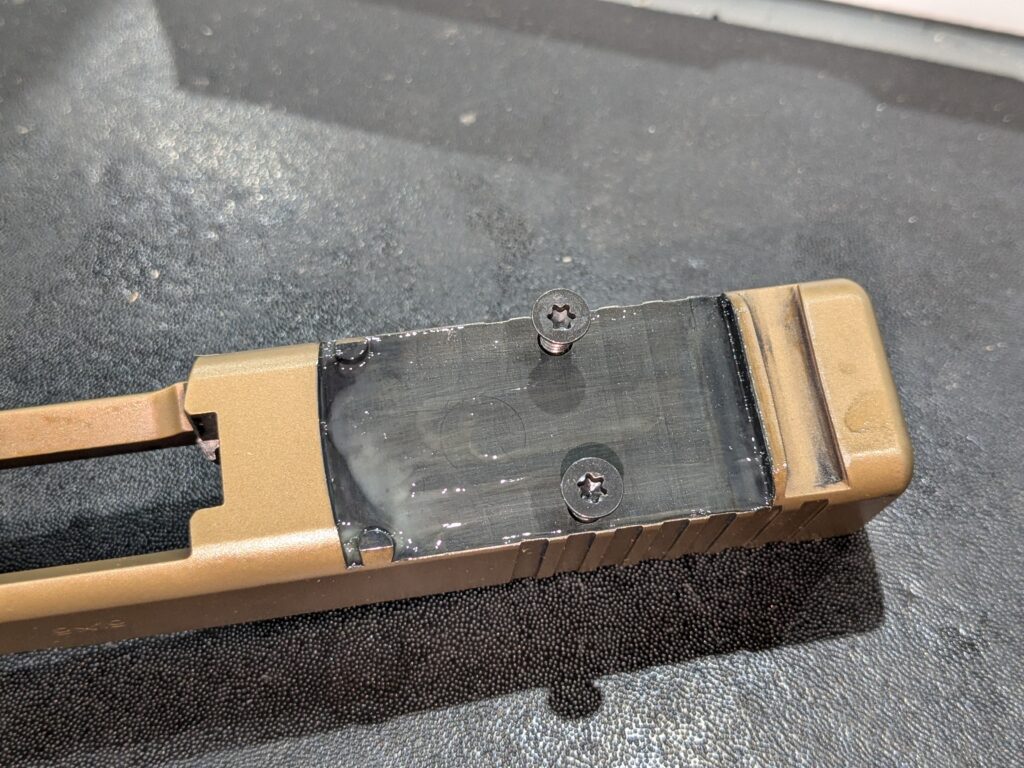
Cold blue is a low-cost option that has become something of an industry standard for optic cuts. Honestly, it is not a finish we push. Its main benefit is that we can refinish just the cut area without refinishing the entire slide, which appeals to customers who want to keep their factory color or want the cheapest option that still beats bare metal. In our experience cold blue is only a small step above no coating. You will still see tool marks through it, and in some cases the blue settles into the tool marks and makes them look more prominent than they are. It is inconsistent by nature because it reacts to the metal, so expect some irregularity.
The blue itself does not offer much corrosion protection. The protection comes from the oil applied at the end of the process, so you have to keep a light coat of oil on the blued surface to keep it protected. We ship these slides with a light oil on the cut area. Depending on your environment you will need to clean and reapply that oil periodically. A good baseline is to check and re-oil it whenever you change your optic batteries, and more often if it looks dry. Dovetail-style mounts (509T, Acro, MPS) need it more often, since that style does not seal against the bottom of the cut the way a screwed-down optic does. As with the no-coating option, because we are not refinishing the whole slide there is always a chance of new cosmetic marks from the milling process.
Cerakote
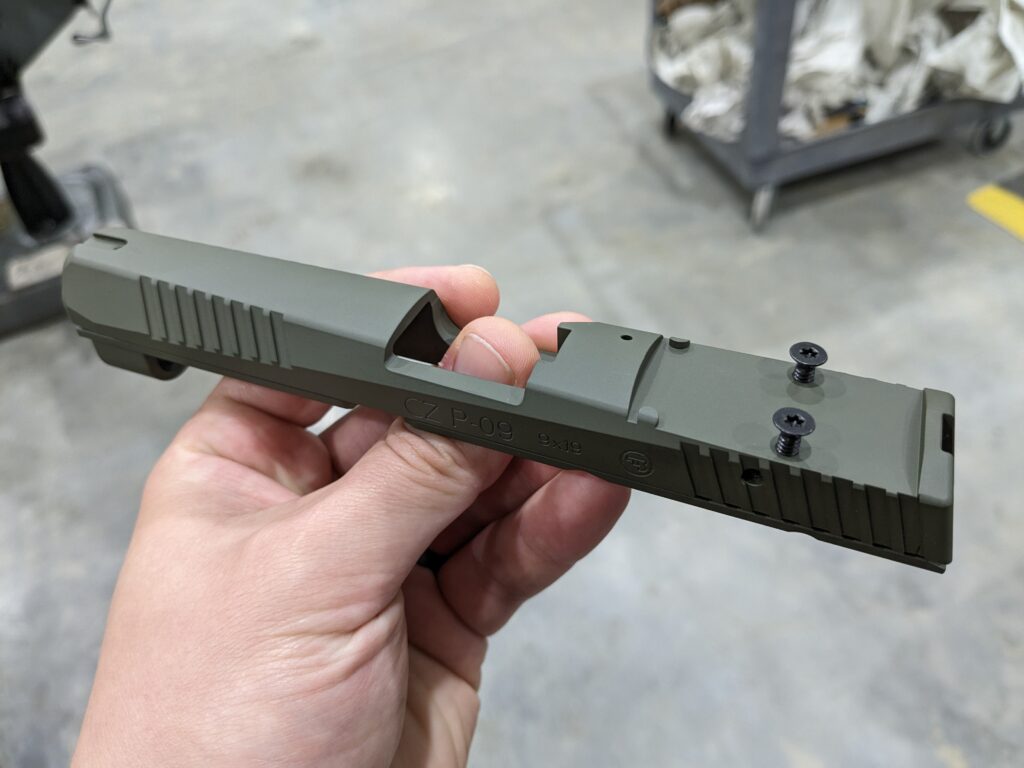
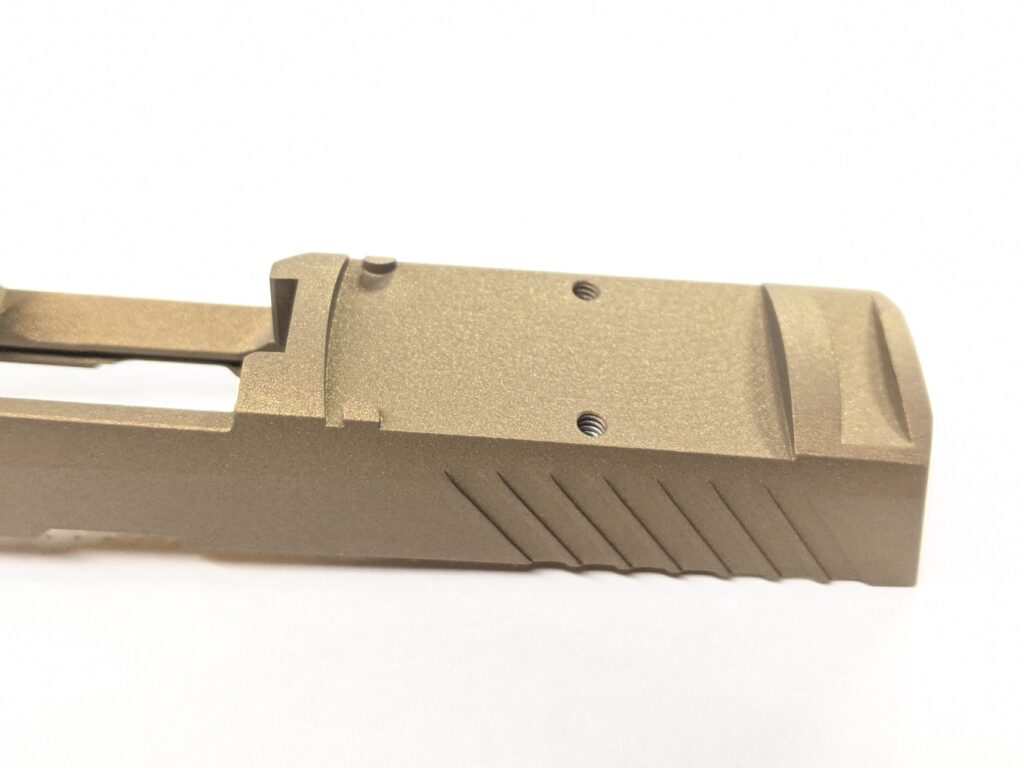
Cerakote is one of our main finishing options and covers the entire slide. It gives you a tough finish at a reasonable cost and lets you change the color of your slide. At the end of the day it is still a painted-on finish and it behaves like one. We use the oven-cure type, so it bakes into the metal for added toughness. Applied correctly it will not flake, but it will wear by abrasion over time, and depending on your holster that wear can happen fairly quickly. When cerakote wears it does not go straight to bare metal, so even with scratches it is still protecting the slide. If it keeps wearing in the same spots down to bare metal, it is time to consider a recoat.
Prep includes blasting all of the current coating off the slide for good adhesion, then degreasing and baking it before we apply and cure the cerakote. Blasting the old coating off keeps the new cerakote from stacking on top of an existing finish and causing fitment issues. Some slides (CZ especially) can be tight after a fresh coat. In most cases you will want to break the slide in with 100 to 200 rounds for consistent function. Hand-racking or lightly working the rails speeds that up. We go light on CZ rails, but the tolerances can be snug enough that even a light coat is tight at first. That is normal, and once it breaks in it is no longer an issue.
Black Nitride
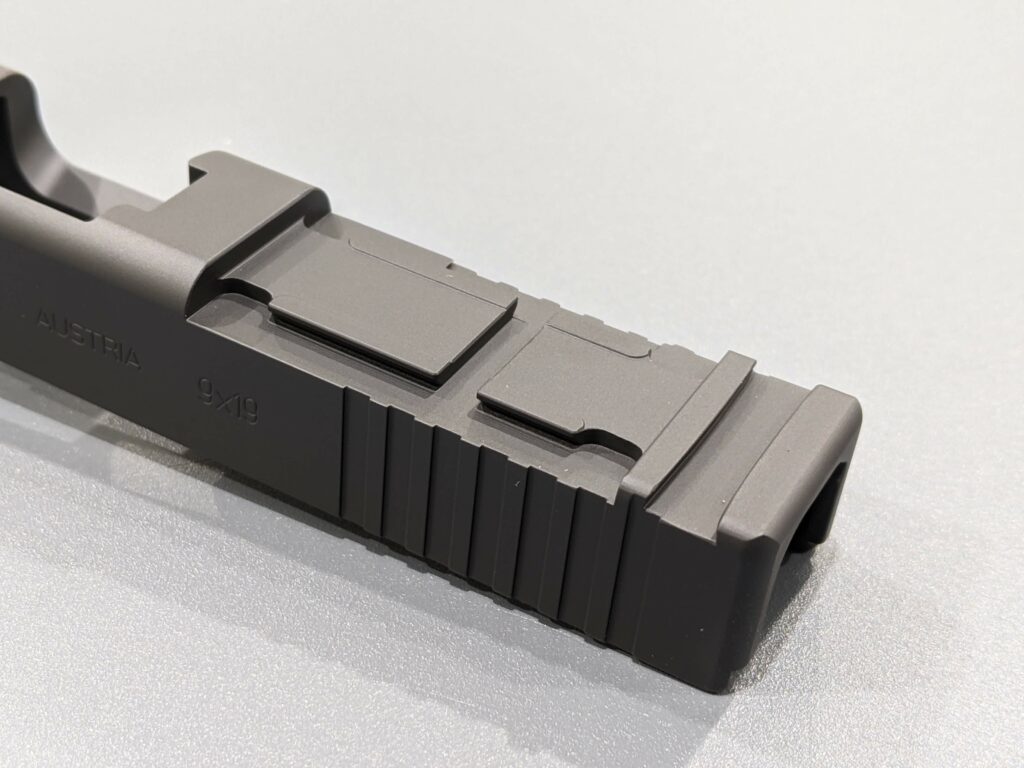
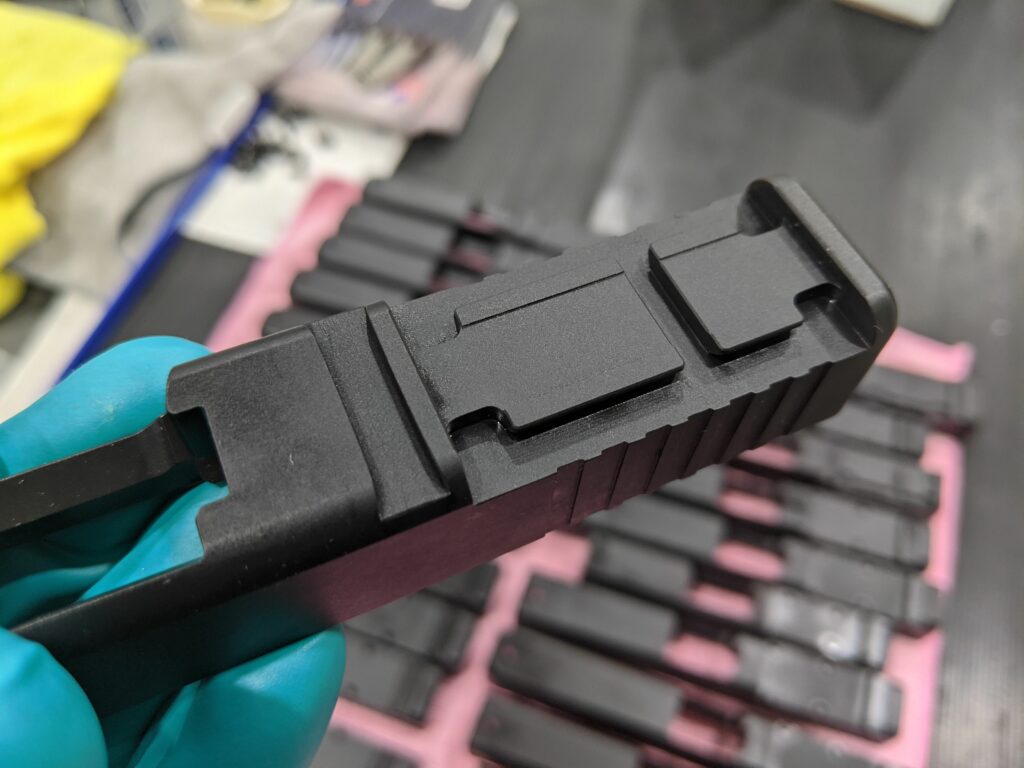
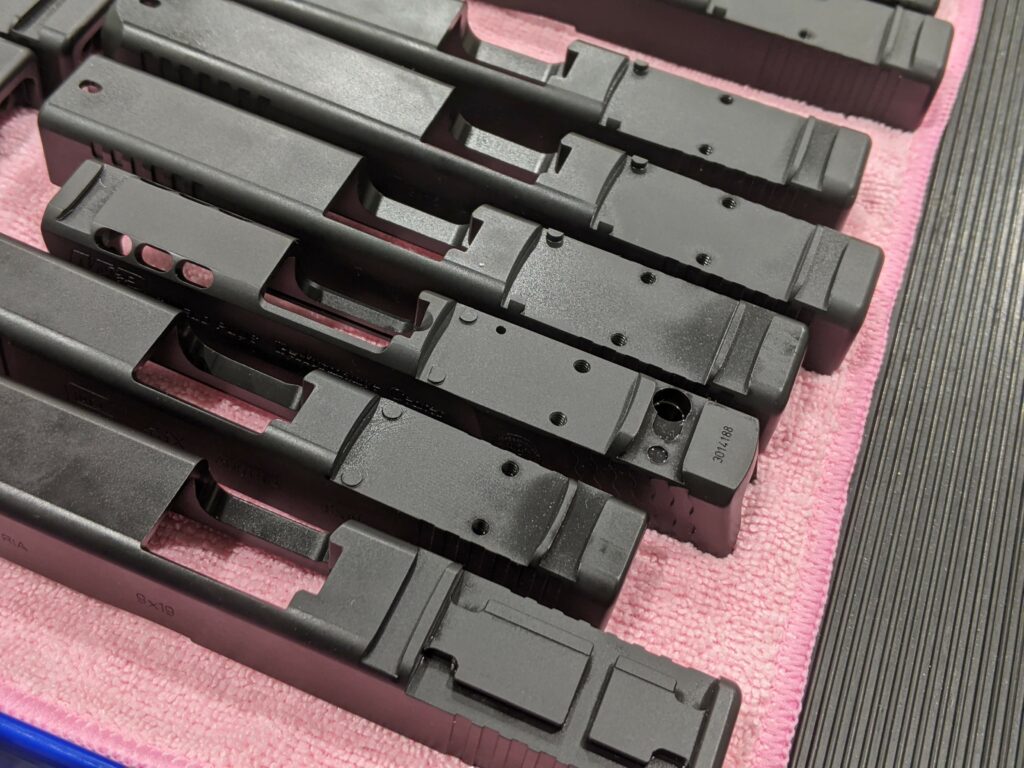
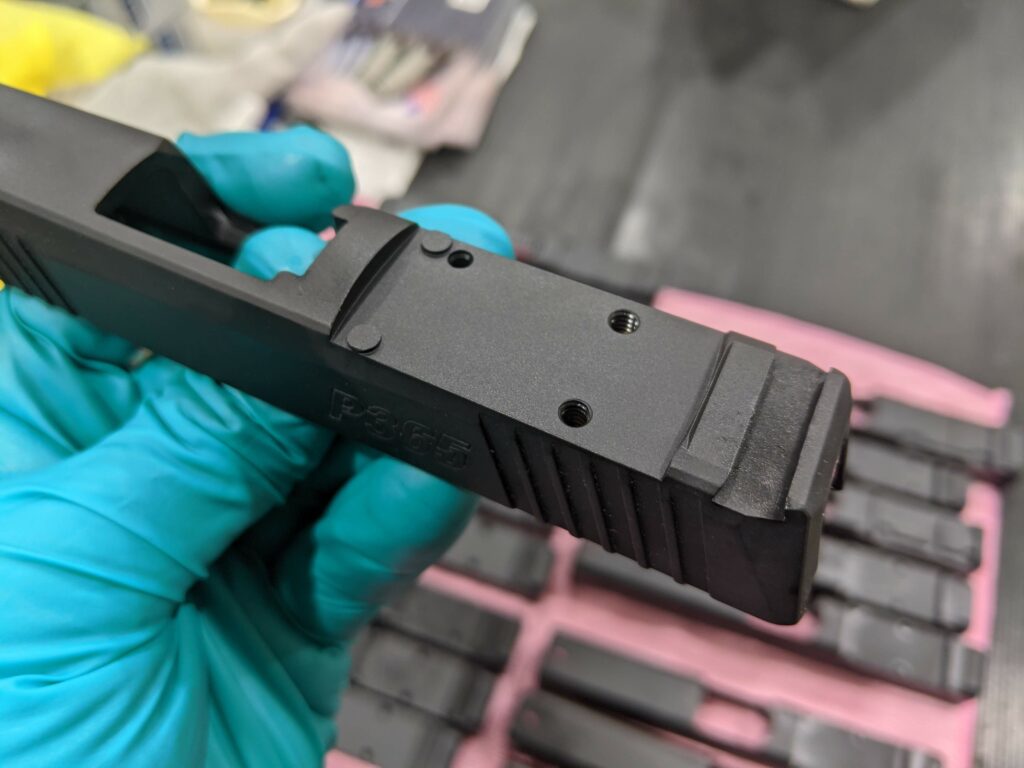
Nitride is our toughest finish and is applied to the entire slide. It is not really a coating, it is more of a metal refinishing process. Rather than adding a layer, it changes the surface of the metal itself, so it is closest to the OEM finish on most slides.
It holds up better than cerakote when holstered and takes more abrasion before it starts to show wear. Because it adds almost no thickness, you typically do not get the fitment issues you can see with cerakote, though you may faintly see tool marks through it. We have had cases where nitride looked like it was scratching but it was actually holster material transferring onto the surface, which cleaned right off with solvent. Nitride is tough and will outlast the other options, but it is still a wearable surface, so over time and depending on use it will show marks like any finish will.
Not sure which finish fits how you carry or shoot? Reach out and we will point you the right way.
READY TO PICK A FINISH?
CONTACT US